June 7, 2026 • Mara Voss • 9 min reading time • Prices verified June 12, 2026
Open-Ear and Sport Headphones: The Safety-First Audio Category That's Finally Worth Buying
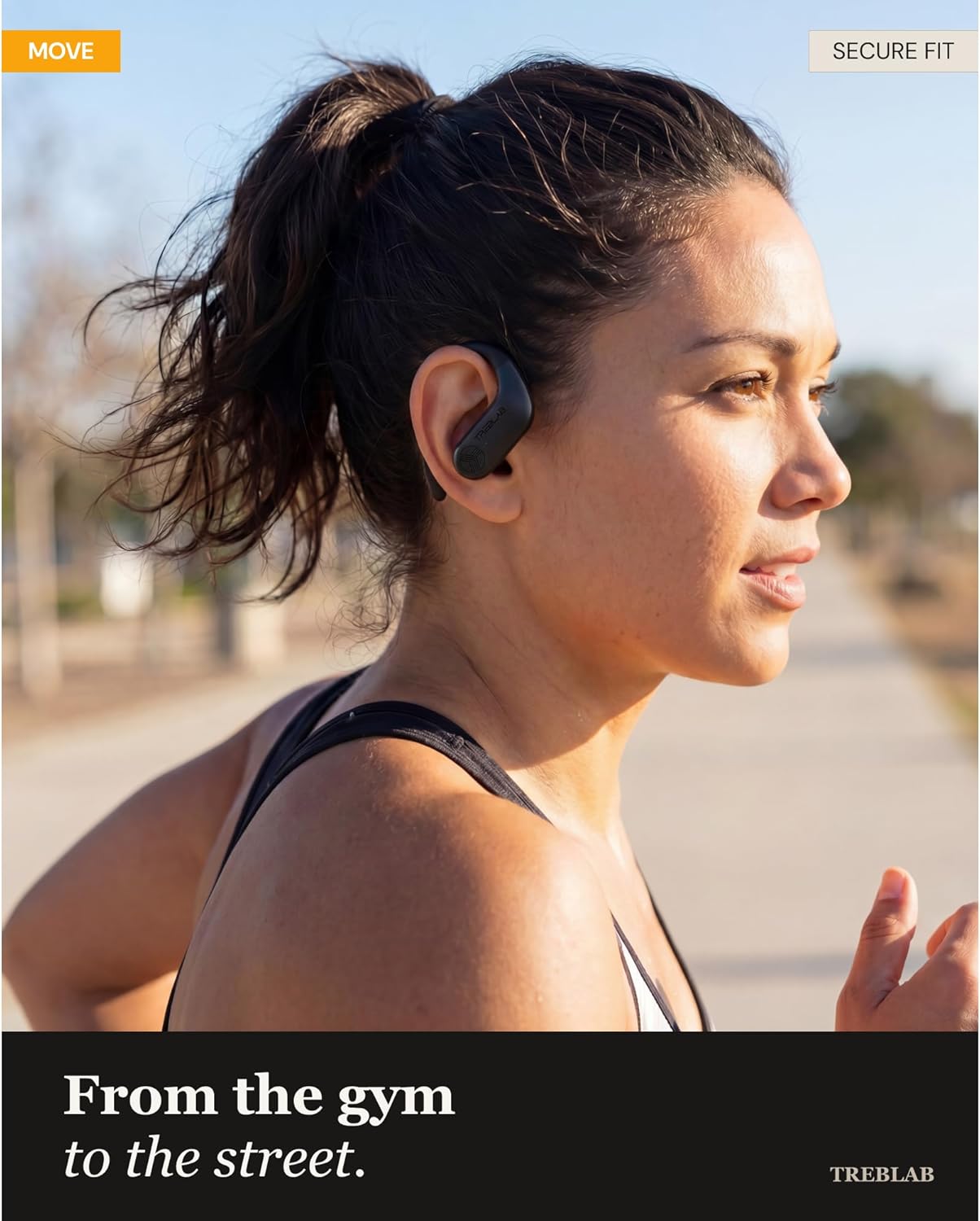
If you’ve ever been on a run and yanked out an earbud to hear whether that car behind you was slowing down, you already understand the problem this category solves. Open-ear headphones — devices that sit outside your ear canal rather than sealing inside it — keep your natural hearing intact while still delivering music, podcasts, or turn-by-turn navigation. No silicone tip lodged in your ear. No acoustic seal cutting off traffic, trail noise, or a training partner’s voice. For years, “open-ear” was a polite way of saying “bad audio strapped to your skull.” That era is over. The past two years have produced several genuinely good options across a real price range, and the decision framework is now worth working through carefully — because the wrong pick at $180 is an annoying mistake, and the wrong pick at $350 is an expensive one.
| EDITOR'S PICKSoundcore Liberty 5 Pro | Mid-tierRaycon Everyday Bluetooth Wirel… | Budget pickTREBLAB X3 Pro - Sports Wireles… | |
|---|---|---|---|
| Noise control | Active NC | Active NC | Noise Isolation |
| Battery life | — | 32h | 12h |
| Water resistance | — | Sweat & Water-Resistant | IPX5 Sweatproof |
| Special feature | Call Quality Certified | — | Secure Ear Hooks |
| Price | $169.99 | $79.99 | $59.97 |
| See on Amazon → | See on Amazon → | See on Amazon → |
What “Open-Ear” Actually Means — and the Two Ways to Do It
The umbrella term covers two meaningfully different technologies, and conflating them is the fastest way to buy the wrong thing.
Bone conduction headphones rest on your cheekbones, just in front of your ears, and vibrate the skull itself to transmit sound to your inner ear. Your ear canal stays completely unobstructed. The trade-off: bass frequencies are physically limited by the vibration mechanism, and at high volumes you can feel the pads buzzing, which some owners find distracting. Shokz (formerly AfterShokz) has dominated this segment for years and remains the category benchmark. RTINGS.com’s open-ear roundup rates the Shokz OpenRun Pro 2 as the top bone-conduction option for runners specifically, citing its improved bass over prior generations — though their panel notes the gap versus traditional earphones remains audible.
Open-ear clip or directional-speaker designs are the newer entrant. These typically hook over or clip to the outer ear and project sound from a small driver angled toward the ear canal without entering it. Bose’s OpenFit, Sony’s Float Run, and the Oladance OWS Sport use versions of this approach. The sound signature is closer to traditional earbuds — more natural bass, better stereo separation — but canal occlusion is still near-zero. Tom’s Guide’s 2025 open-ear roundup described Bose’s OpenFit as “the clearest demonstration yet that you don’t need bone conduction to get the safety benefit,” noting that owners consistently report a significantly more natural listening experience than bone-conduction alternatives at the same price point.
The decision rule is simpler than it looks: if you do high-intensity swim-adjacent activity, bone conduction wins on pure ingress protection. For running, cycling, gym work, and commuting, directional-clip designs now have the edge on audio quality and comfort at equivalent price points.
By the Numbers
| Model | Type | Price (USD, May 2026) | IP Rating | Battery |
|---|---|---|---|---|
| Shokz OpenRun Pro 2 | Bone conduction | $180 | IP55 | 12 hrs |
| Shokz OpenSwim Pro | Bone conduction | $180 | IP68 | 9 hrs |
| Bose Sport Open Earbuds | Directional clip | $199 | IPX4 | 8 hrs |
| Sony Float Run | Ear-hook directional | $130 | IPX4 | 10 hrs |
| Oladance OWS Sport | Directional clip | $159 | IPX4 | 8 hrs (+case) |
IP ratings matter here: IP55 means dust-resistant and splash-proof; IP68 means fully submersible. If open water or lap swimming is in the use case, only the OpenSwim Pro tier is genuinely appropriate.
Where the Category Still Falls Short (and What That Means for Your Decision)
Being honest about the limitations isn’t pessimism — it’s the difference between a satisfied buyer and a return. Three persistent issues show up across aggregated owner reviews:
1. The bass ceiling is real. Wirecutter’s running headphones guide is explicit: “If you need your music to hit hard, no open-ear design — bone conduction or clip-on — currently matches the low-end punch of a sealed earbud.” Owners of the Bose OpenFit and Shokz OpenRun Pro 2 alike report that bass is present but light. For podcasts, audiobooks, and melodic music this is a non-issue. For bass-heavy workout playlists, it’s a genuine limitation. Know your library before you buy.
2. Wind noise is the adversary at speed. Cyclists and fast runners consistently flag this in long-form reviews. At 20+ mph, directional designs can channel wind across the driver and produce a low roar that partially obscures audio. Bone conduction designs are less susceptible because there’s no exposed driver facing the airstream. CNET’s sport headphone guide specifically calls wind noise “the key differentiator between bone conduction and clip designs for cyclists.”
3. Fit variance is high. Open-ear designs lack the canal-seal that passive fit provides with in-ear earphones. A good clip-on that fits one ear shape may shift or require constant adjustment on another. This is the strongest argument for buying from retailers with honest return windows — Amazon’s standard policy, Best Buy’s open-box program, and direct-from-manufacturer purchases with 30-day trials are the pragmatic answer here. A 14-day return window on a $200 headphone you’re evaluating for fit is genuinely not enough time.
The Practical Tier Breakdown: Where to Spend
Under $150 — The Honest Entry Point
Sony’s Float Run ($130) is the most-cited recommendation at this tier across both RTINGS and Tom’s Guide. The over-ear hook design positions a speaker driver just outside the canal, and owners consistently describe the fit as more secure than clip-only designs during sustained running. Audio quality reviews are uniformly “better than expected at this price” — which, given the category’s historical mediocrity, is a meaningful signal. The IPX4 rating handles sweat and light rain without issue. If you’re uncertain whether you’ll like open-ear as a format, this is the right first purchase. The cost of being wrong is low.
The Shokz OpenRun (non-Pro, $130) is the bone-conduction equivalent — it’s been reviewed favorably for years, the fit is proven for endurance athletes, and the IP55 rating handles conditions the Sony’s IPX4 doesn’t. Audio quality reviews are more mixed; owners who upgraded from this to the Pro report the bass improvement is audible and worth the price difference.
$150–$200 — The Sweet Spot
The Shokz OpenRun Pro 2 ($180) and Bose Sport Open Earbuds ($199) represent the two dominant philosophies at peak value. The decision between them is almost entirely “bone conduction or not” — refer back to the framework above. The Bose gets the edge from audio reviewers across CNET and Tom’s Guide for sheer listening enjoyment; the Shokz gets the edge for swimmers, triathletes, and anyone who wants IP55+ ingress protection without spending more.
The Oladance OWS Sport ($159) is worth naming because it’s a genuine dark horse. The Verge’s review described it as “surprisingly competitive with Bose at a lower price point,” with owners noting the charging case extends total battery meaningfully. The brand has less retail presence than Shokz or Bose, which means repair and warranty experience is an unknown — factor that into a $1,000+ athletic lifestyle kit where these are one piece of a larger investment.
$200–$350 — When Premium Is Actually Justified
This is where the category gets philosophically interesting. Shokz’s OpenDive ($230) adds spatial audio positioning and bone conduction in a design purpose-built for open-water and surf use — it’s extremely niche, but within that niche it has no direct competition. For the triathlete or open-water swimmer who has already burned through two sets of standard running buds, it’s defensible.
Above $250, the honest editorial position is: the incremental audio improvement from open-ear designs doesn’t yet justify premium prices the way it does in sealed or over-ear categories. A $300 sealed workout earbud (Sony WF-SP900, Jabra Elite Active 8) will outperform a $300 open-ear design on pure audio quality by a margin that reviewers and owners consistently agree is not subtle. You’re paying for the situational-awareness feature, not audio fidelity. If situational awareness is genuinely your use case — competitive cycling, trail running in wilderness, urban commuting — that’s a completely legitimate premium. If you’re buying primarily for sound quality and hoping the open-ear benefits are a bonus, save your money and buy a sealed pair with a transparency mode.
The Transparency Mode Question
No open-ear guide is complete without addressing the obvious competitive threat: ANC (active noise cancellation) earphones with transparency or awareness modes, like the Apple AirPods Pro 2 or Sony WF-1000XM6, which use microphones to pass-through ambient sound even when the ear canal is sealed.
The honest answer is that transparency mode has gotten genuinely good. The Verge’s review of AirPods Pro 2 noted that transparency mode “approaches the experience of not wearing earphones at all” — and owners of both formats consistently report that AirPods Pro 2 in transparency mode is sonically superior to any open-ear design currently available while still delivering most of the situational-awareness benefit.
The remaining advantages of true open-ear designs in 2026 are: (1) no latency in ambient sound pass-through — transparency modes have a processing delay that’s imperceptible for most use cases but can matter in technical athletic situations; (2) canal comfort during extended wear — even the best-fitting sealed tip creates pressure over hours that open-ear designs eliminate entirely; (3) better fit stability for high-intensity sport than the stem-style AirPod form factor, which owners rate as secure for moderate running but less reliable in contact sports or intense intervals.
The If/Then Decision Framework
Work through this in order:
- If you swim competitively or do open-water sport → Shokz OpenSwim Pro. Nothing else has the IP68 rating and the proven bone-conduction reliability for this use case.
- If you run, cycle, or do gym work and wind noise is a concern → Shokz OpenRun Pro 2 over directional clip designs.
- If audio quality is the priority and you do moderate-intensity sport → Bose Sport Open Earbuds or Sony Float Run, with the Bose worth the extra $70 if you’ll use them for music-heavy sessions.
- If you’re unsure whether open-ear suits you and want a low-risk test → Sony Float Run at $130 with an Amazon or Best Buy return policy. Wear them for two full weeks of your actual workouts before deciding.
- If you already own Apple AirPods Pro 2 → Try transparency mode for a month before buying anything. For most non-competitive-sport users, it’s genuinely good enough to skip the category entirely.
- If you’re buying as a gift → Shokz OpenRun Pro 2 is the safest call. The brand recognition is high, the return story is easy to explain, and the IP55 rating means it handles more conditions than the recipient might think to ask about.
The category has arrived. The only mistake left to make is buying more than your actual use case requires — or less than your conditions demand.