May 30, 2026 • Mara Voss • 8 min reading time • Prices verified June 12, 2026
Noise-Cancelling Headphones: When Bose's $359 Price Tag Is Worth It and When It Isn't
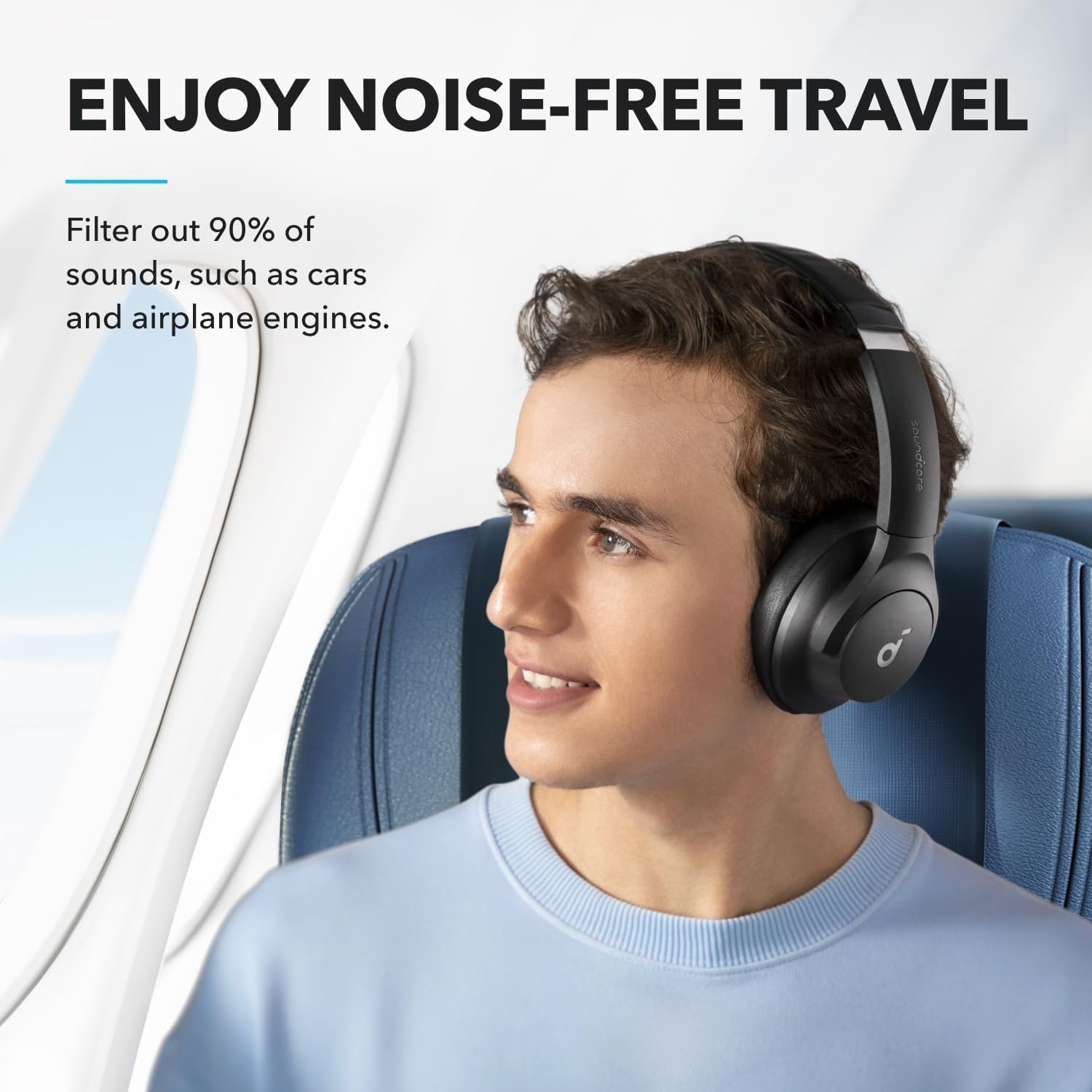
Noise-cancelling headphones do exactly what the name promises: they use tiny built-in microphones to sample the ambient sound around you, then generate an opposing audio wave that cancels it out before it reaches your ears. The result — especially on planes, in open-plan offices, or beside a loud HVAC unit — is a dramatic reduction in background noise even before you play a single note. Active noise cancellation (ANC) is now table stakes at every price tier above $100, which is exactly why the decision has gotten harder. Bose essentially invented the category for consumers, and its QuietComfort Ultra sits at $359 as of May 2026. That number comes up constantly in gift guides and “best of” roundups. But “best in class” doesn’t mean “right for you.” This guide will give you a clear framework for when the Bose price premium pays off, when a $279 Sony or a $249 Anker Soundcore buy makes more sense, and when you should be looking at $450+ instead.
What You’re Actually Paying For at $359
The Bose QuietComfort Ultra’s price isn’t arbitrary. Rtings.com’s review of the QuietComfort Ultra Headphones gives it top marks for ANC effectiveness across a wide range of noise profiles — specifically noting strong attenuation of low-frequency rumble (engine noise, HVAC, subway) as well as mid-frequency chatter, which is the harder problem most competitors still struggle with. Owners consistently report that the passive comfort of the earcup design — lightweight clamping force, plush oval pads — means the headphones disappear on the head over multi-hour sessions in a way that competitors haven’t quite replicated.
You’re also paying for Bose’s Immersive Audio mode, the brand’s implementation of head-tracked spatial audio. Whether that matters depends almost entirely on use case, which we’ll get to.
What you are not paying for, relative to some competitors at a lower price:
- Best-in-class audio fidelity. Across aggregated reviews, the Sony WH-1000XM5 (and its successor, the XM6, now widely available at $349–$379) consistently edges the Bose in raw sound quality — more sub-bass extension, slightly more transparent mids. The Verge’s coverage of the Sony WH-1000XM6 explicitly positions it as the better choice for listeners who prioritize music reproduction over ride-or-die ANC comfort.
- The longest battery life. Manufacturer-rated specs put the Bose QC Ultra at 24 hours with ANC on. Sony’s XM6 is rated at 30 hours. For transcontinental flights or full-day conference travel, that gap is real.
- Multipoint reliability across three+ devices. Owners of the Bose frequently note that the two-device multipoint works cleanly but doesn’t match Sony’s or the Anker Soundcore Q45’s flexibility for people juggling laptop, phone, and tablet simultaneously.
The Decision Frame: Four Buyer Profiles
Rather than declaring a winner, let’s map the decision to the actual tradeoffs you’re weighing.
Profile 1: The Long-Haul Traveler or Open-Office Worker
This is Bose’s home court. If you board planes more than six times a year or sit within earshot of an open floor plan, the two things that matter most are (a) how effectively low-frequency engine and HVAC noise disappears and (b) whether you can wear the headphones for four-plus hours without ear fatigue.
Wirecutter’s “Best Noise-Cancelling Headphones” guide has consistently named a Bose model — currently the QC Ultra — as the top pick for exactly this profile, citing the comfort lead as the differentiator that sustains over an eleven-hour flight. Reviewers at CNET’s best noise-cancelling roundup echo this, noting that the QC Ultra’s ANC is particularly effective on low-frequency drone.
If this is you: The $359 is defensible. You’ll use this thing for three or more years. At roughly $120/year for the Bose versus $93/year for a Sony XM5 at $279, you’re paying about $27/year for the comfort and ANC edge. That’s easy math.
Profile 2: The Audiophile-Adjacent Listener
You care more about how your music actually sounds than about blocking out a turboprop. You’re comparing headphones in a quiet room, not on the JFK-to-LAX red-eye. You listen to lossless audio on Apple Music or Tidal.
Here, the Sony WH-1000XM6 at $349–$379 or the Bose QuietComfort Ultra’s own sibling — the older, still-available QC45 at around $229 on sale — makes more sense than the QC Ultra. The XM6’s LDAC codec support means it can receive higher-quality Bluetooth audio from Android devices and from Amazon Music Ultra. The Bose QuietComfort Ultra supports the AAC codec (optimal for iPhones) but not LDAC, a limitation that audiophile owners on Android consistently flag.
If this is you: Sony is the smarter call unless you’re locked into an iPhone ecosystem.
Profile 3: The Gift Buyer Choosing for Someone Else
This is where the Bose brand equity and the unboxing experience start to earn their keep. Bose’s packaging is clean, premium, and deliberately “giftable” in a way that the similarly-priced Sony and Anker boxes are not. If you’re presenting this as a milestone gift — graduation, promotion, a partner who commutes daily — the Bose presentation lands better.
The return window is also relevant here: Bose’s direct store (BoseStore.com) offers a 90-day return window. Amazon’s standard 30-day window applies if purchased there. For a gift that might sit wrapped under a tree for three weeks, buying directly from Bose matters.
If this is you: The Bose QC Ultra is the safer gift choice at $359, even if a head-to-head comparison would steer a self-purchaser toward Sony.
Profile 4: The Budget-Conscious Self-Purchaser
At $249 or less, the Anker Soundcore Space Q45 occupies a tier that many reviewers treat as the “90% of the Bose at 70% of the price” option. CNET’s roundup flags it as a best-value pick, with ANC that owners consistently describe as “surprisingly effective” for commuting and focus work. The audio quality is slightly compressed in the highs, and the earcup padding is less plush, but both are invisible to most casual listeners.
The Sony WH-1000XM5 (the outgoing model, now available refurbished or open-box at $199–$229) hits a different sweet spot: near-flagship ANC and audio with a significant discount off peak retail. Sony’s certified refurbished program through its authorized resellers is considered one of the more trustworthy in consumer audio.
If this is you: Save your money on the Bose. Put the difference toward a subscription that matters to you, or pocket it.
By the Numbers
| Model | Street Price (May 2026) | ANC Effectiveness* | Battery (ANC on) | LDAC Support |
|---|---|---|---|---|
| Bose QC Ultra | $359 | Excellent (class leader) | 24 hrs | No |
| Sony WH-1000XM6 | $349–$379 | Excellent | 30 hrs | Yes |
| Sony WH-1000XM5 (refurb) | $199–$229 | Excellent | 30 hrs | Yes |
| Anker Soundcore Q45 | $79–$99 | Very Good | 50 hrs | No |
*ANC effectiveness ratings aggregated from Rtings.com measurements and Wirecutter editorial assessments.
The Ecosystem Question Nobody Asks First
Here’s the one variable that should precede every other comparison: what phone is in your pocket?
Bose’s QuietComfort Ultra uses AAC for its highest-quality Bluetooth audio transmission. AAC is Apple’s codec, and it performs best on iPhones. On Android, AAC is often re-encoded in ways that reduce quality, depending on the phone manufacturer’s Bluetooth stack implementation. If you’re an Android user — especially if you’re on a Samsung Galaxy, Google Pixel, or any phone that supports LDAC — a Sony is objectively delivering higher-quality audio to your ears at the same price tier.
Conversely, if you’re giving this as a gift to an iPhone user who commutes by train and complains about noise, the Bose QC Ultra is the single most defensible recommendation you can make. The ecosystem fit, the ANC comfort lead, and the Apple integration (including Siri shortcut compatibility and clean AAC playback) all align.
The rule: iPhone → Bose or AirPods Max. Android → Sony. Either platform, budget-constrained → Anker Soundcore Q45.
One Scenario Where You Should Spend More
The Apple AirPods Max at $549 (aluminum) or $499 (aluminum, now broadly available) comes up often in this tier because of its deep iOS integration: automatic device switching across iPhone, iPad, and Mac is genuinely seamless in a way that no cross-platform manufacturer has matched. Owners consistently report that the switching “just works” in a way that Bose’s and Sony’s multipoint connections don’t fully replicate within the Apple ecosystem.
If the recipient owns multiple Apple devices and switches between them constantly — desk Mac, MacBook, iPhone, iPad — the $149–$190 premium over the Bose buys a workflow improvement that’s concrete and daily. Wirecutter’s headphones coverage acknowledges the AirPods Max as the best choice for all-Apple households despite reservations about the non-folding form factor and older H1 chip in prior models.
That said: the AirPods Max’s ANC, while excellent, is not meaningfully better than the Bose in real-world conditions per Rtings.com’s comparative measurements. You’re paying for ecosystem, not isolation.
The Decision Rule
Here’s the distilled version:
- iPhone user, heavy traveler or open-office worker, comfort matters → Bose QC Ultra at $359. Worth it.
- Android user, cares about sound quality, or wants maximum battery → Sony WH-1000XM6 at similar price. Better fit.
- All-Apple household, device-switching is a daily pain point → AirPods Max. Spend the extra.
- Budget-conscious, casual use, commuting → Anker Q45 at $79–$99. Save your money.
- Gift purchase where presentation counts → Bose QC Ultra. The packaging and brand recognition earn their keep.
The $359 Bose is not overpriced for what it does. It’s overpriced for what some people need. Know the profile, run the ecosystem check, and the decision practically makes itself.