June 2, 2026 • Mara Voss • 10 min reading time • Prices verified June 12, 2026
Garmin Instinct vs. vívoactive: The Rugged vs. Refined Smartwatch Debate Settled
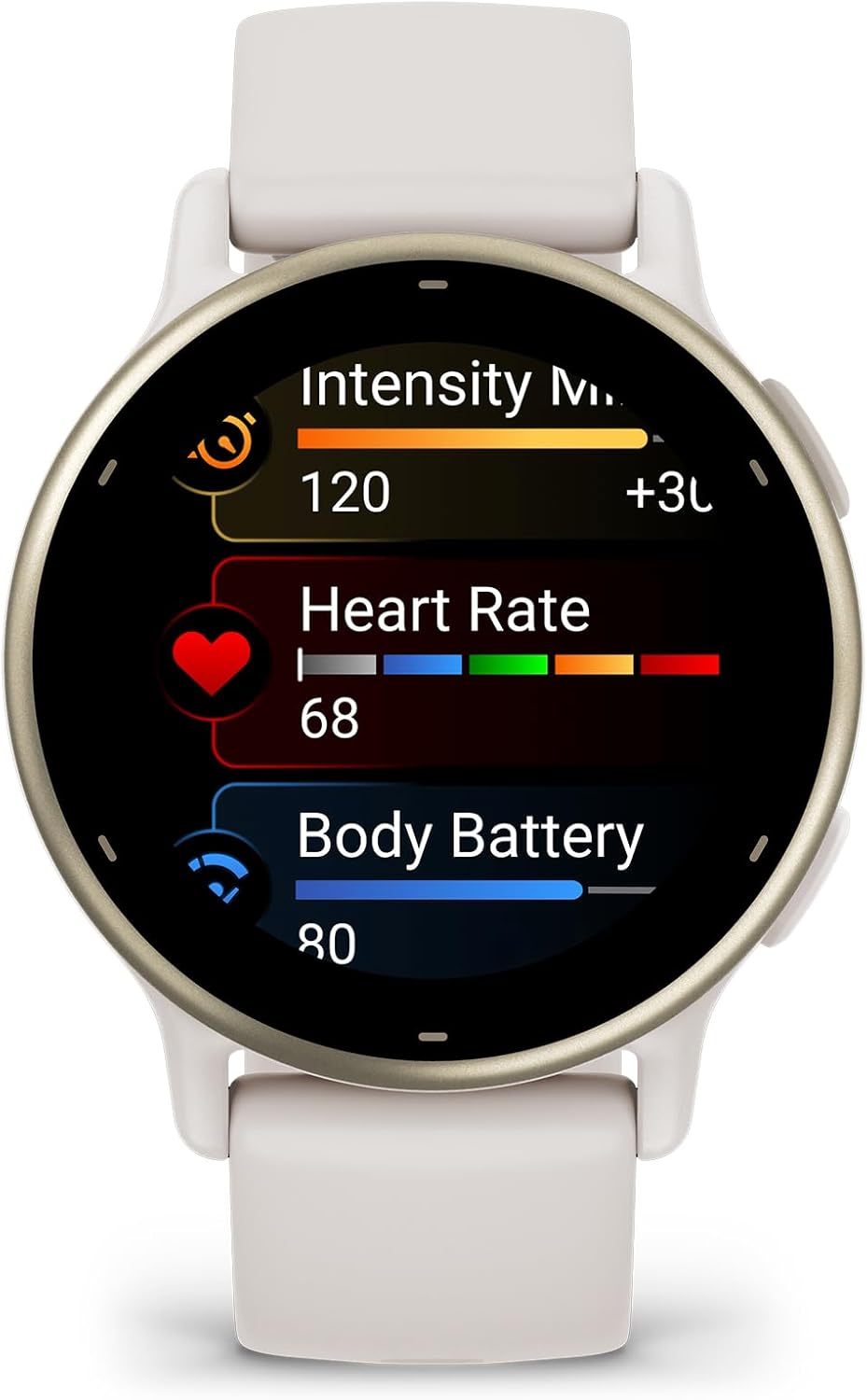
Garmin makes GPS smartwatches — wearable computers on your wrist that track everything from your daily step count to your heart rate on a mountain trail — and two of their most popular lines sit at opposite ends of a very specific spectrum. The Instinct series is built like a piece of military-grade equipment: thick, practically indestructible, designed for people who spend serious time outdoors. The vívoactive series looks like something you’d wear to a board meeting: slim, stylish, capable of health tracking and contactless payments without screaming “expedition gear.” Both cost between $200 and $450 depending on the model. Both are Garmin products, which means both are genuinely excellent. The question is which one is excellent for you — and that answer comes down to one honest question you need to answer before you buy anything.
That question: Are you primarily protecting the watch from your lifestyle, or are you primarily using the watch to understand your lifestyle? Everything else follows from there.
| EDITOR'S PICK[Garmin vívomove Trend](https://www.amazon.com/dp/B0BMQPH345?tag=greenflower20-20) | Mid-tier[Garmin Instinct® E 45mm](https://www.amazon.com/dp/B0DSC72873?tag=greenflower20-20) | Budget pick[Garmin vívoactive 5](https://www.amazon.com/dp/B0CG6NBJ61?tag=greenflower20-20) | |
|---|---|---|---|
| Display type | Touchscreen | — | AMOLED |
| Battery life | Long-lasting | Up to 16 days | Up to 11 days |
| Health monitoring | — | 24/7 | — |
| Heart rate monitor | — | Wrist-based | — |
| GPS | — | Outdoor GPS | GPS |
| Rugged design | — | Rugged | — |
| Price | $269.99 | $199.99 | $189.99 |
| See on Amazon → | See on Amazon → | See on Amazon → |
What You’re Actually Choosing Between
Let’s be precise about the product landscape as of mid-2026, because Garmin’s lineup has expanded and the naming can get confusing fast.
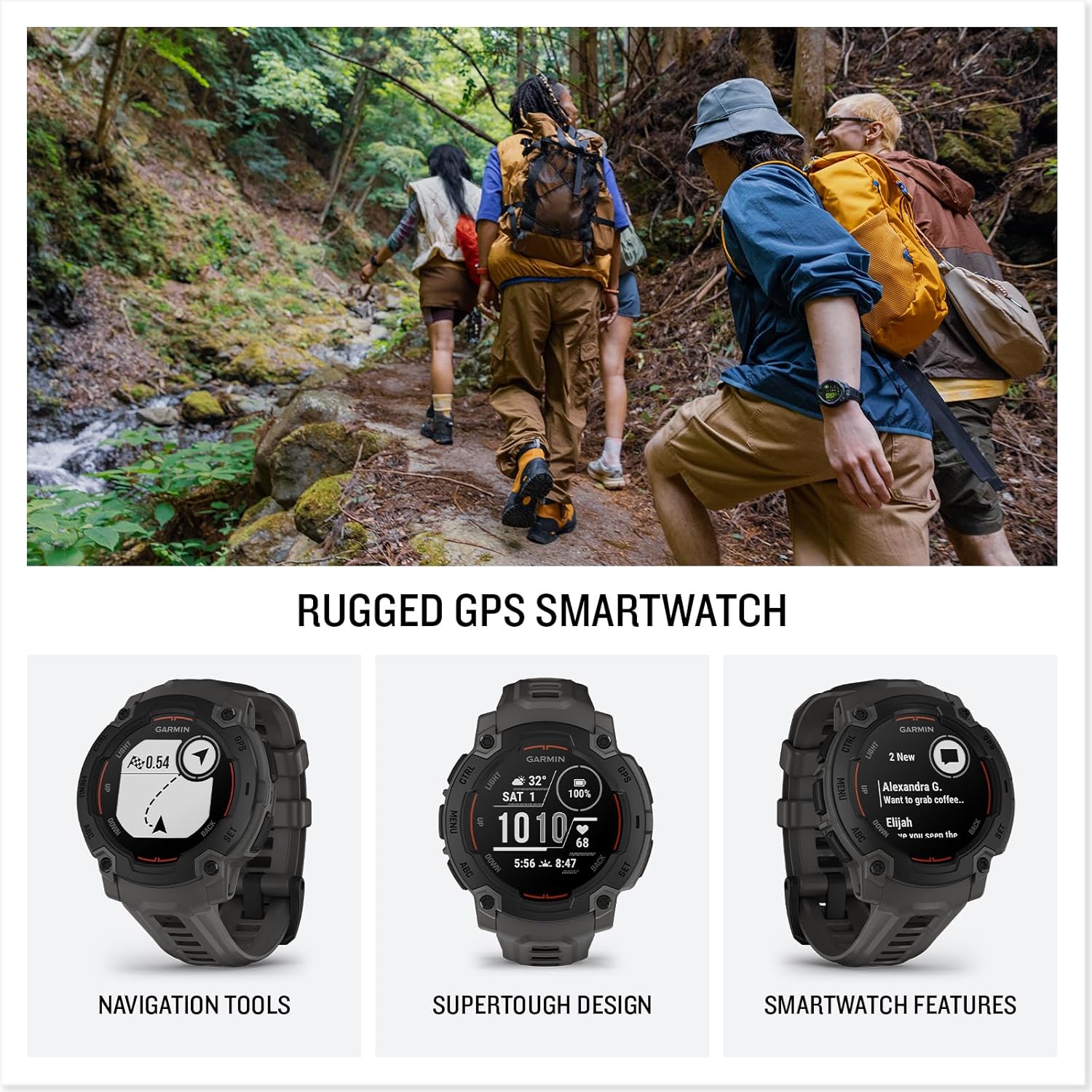
The Instinct 2 and Instinct 2X Solar are the current flagship rugged tier. The 2X Solar is the larger, 50mm version with a solar-charging lens that can meaningfully extend battery life in direct sunlight. The standard Instinct 2 comes in a 45mm case. Both use a fiber-reinforced polymer case — a tough engineered plastic, not metal — meet MIL-STD-810G military durability standards (meaning they’ve been rated to survive temperature extremes, shock, humidity, and vibration in standardized testing), and carry a 100-meter water resistance rating. The display is a transflective memory-in-pixel screen: it reads perfectly in bright sunlight, which matters enormously on a trail, but it looks utilitarian compared to a smartwatch AMOLED. Published battery life is rated at up to 28 days in smartwatch mode for the standard Instinct 2, and the 2X Solar can push significantly beyond that with sun exposure. DC Rainmaker’s in-depth review titled “Garmin Instinct 2X Solar In-Depth Review” confirms the solar charging is genuinely useful rather than a marketing claim, particularly for users doing multi-hour outdoor activities in direct sun.
The vívoactive 5 is the current flagship of that line. It runs a 1.2-inch AMOLED display — the bright, vivid screen type used in smartphones — sits in a 42mm aluminum case, and weighs just 26 grams without the band, lighter than most premium mechanical watches. It supports Garmin Pay contactless payment, offline Spotify and Amazon Music playback, and a full suite of health sensors including a newer multi-band pulse oximeter. Battery life is rated at up to 11 days in smartwatch mode, dropping to roughly 8 hours with GPS active. The Verge’s review of the vívoactive 5 consistently highlights how much the watch improved over prior iterations in display quality and software polish, while noting that the aluminum case is a meaningful step up from plastic but still not in the same durability class as the Instinct.
Head-to-Head: Three Scenarios That Separate These Watches
The Outdoor Expedition User
If you spend meaningful time in conditions where a watch needs to survive — backcountry skiing, trail running in Pacific Northwest mud, week-long bikepacking routes, or even a demanding job site — the Instinct is not a luxury. It’s the correct tool.
The MIL-810G rating is one data point, but the more practically relevant spec is battery life. Forty days in smartwatch mode with solar assistance, or up to 60 hours of continuous GPS tracking, means you can leave for a seven-day hiking trip without carrying a charger. That is something the vívoactive 5 simply cannot do. Tom’s Guide’s review of the Instinct 2, titled “Garmin Instinct 2 Review,” notes the watch maintains full smartwatch functionality — smartphone notifications, Garmin Connect app sync, Garmin Coach training plans — while adding the durability layer. You’re not trading smart features for toughness. You’re paying for the engineering required to keep those features alive under punishment.
The transflective display, which reads easily in direct sunlight without a backlight, is actively better than AMOLED when you’re outside at noon. AMOLED screens are gorgeous in dim indoor light and genuinely difficult to read in full sun. If your most important use case involves checking navigation data on a trail midday, that hardware distinction matters every single outing.
The tradeoff is real: the Instinct is visually imposing. At 50mm with a textured polymer case and an industrial bumper ring, it reads as outdoor gear, not fashion accessory. For many buyers, that’s exactly right. For buyers who want to wear the same watch to a client dinner and a weekend hike, it can feel like a mismatch.
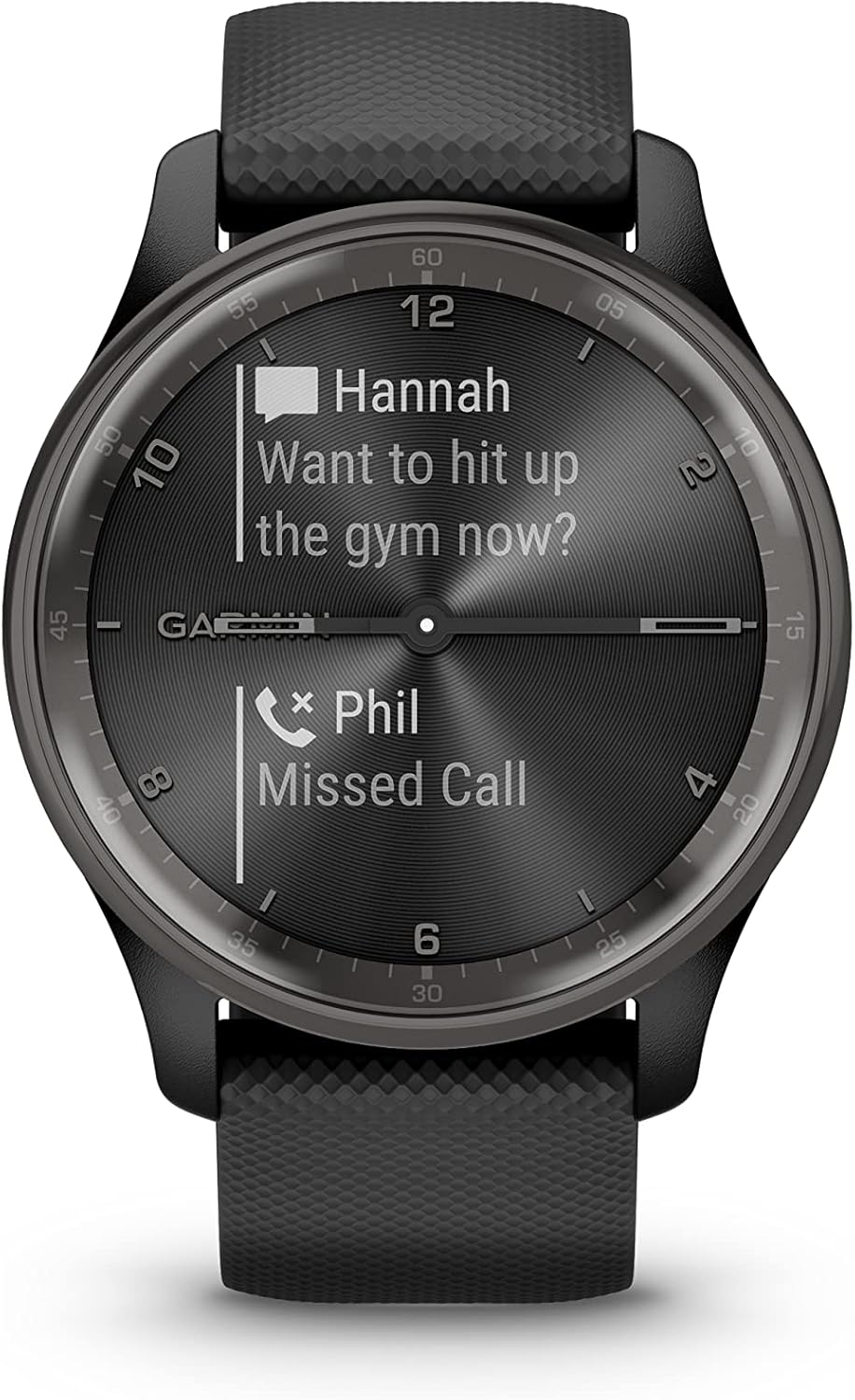
Garmin
$269.99
In stock on Amazon
Check price on AmazonThe Urban Health and Fitness User
The vívoactive 5 is the better watch if your life is primarily urban, gym-oriented, or mixed-use — and if you care about the experience of wearing it every day.
The AMOLED display changes the daily experience in ways that are hard to convey through specs. The Verge’s vívoactive 5 review and CNET’s “Best Garmin Watches” roundup both point to the display as the watch’s strongest upgrade over prior generations: watch faces look vibrant, health dashboards are readable at a glance, and the watch genuinely doesn’t look out of place in professional settings. At 26 grams, owners report forgetting it’s on their wrist during sleep tracking — which matters, because Garmin’s sleep data is only useful if you wear the watch consistently throughout the night.
Garmin Pay and offline music playback aren’t trivial additions. For someone running without a phone, having a watch that plays synced Spotify playlists and lets you tap to pay at a post-run smoothie stop is a meaningful quality-of-life feature. The Instinct 2 does not support Garmin Pay or offline music. That is a clean, definitive product differentiation between the two lines, not a matter of configuration.
The 5 ATM water resistance covers swimming, lap pool workouts, and getting caught in a downpour. For 95% of fitness use cases, that’s more than sufficient. The gap between 5 ATM and 100 meters matters primarily for scuba diving and extreme water sports — scenarios where neither watch is the right primary instrument anyway.
The honest downside: 11 days of battery life sounds impressive compared to an Apple Watch’s roughly 18 hours, but relative to the Instinct, you’re charging this watch approximately three times per month versus potentially zero. If you travel, camp, or simply forget to charge on a consistent basis, that gap compounds into real friction.
Garmin
$199.99
In stock on Amazon
Check price on AmazonThe Trail Runner or Cyclist With an Urban Life
This is the genuinely contested case, and most comparison articles skip it. The Instinct 2 — the non-solar, 45mm version — sits at a street price of roughly $280 to $300, nearly matching the vívoactive 5 while adding the rugged build. For athletes who train hard outdoors but live otherwise urban lives, the decision hinges on two specific questions.
First: When do you run? If you train in direct midday sunlight, the Instinct’s transflective display is more readable during the activity itself. If you primarily run at dawn, dusk, or under dense tree canopy, the vívoactive’s AMOLED is brighter in low ambient light and easier to read at a glance. DC Rainmaker’s “Garmin Instinct 2X Solar In-Depth Review” addresses this display tradeoff directly for outdoor athletes, noting the MIP display’s advantage is specifically tied to high-ambient-light conditions.
Second: How long are your longest outings? Anyone logging multi-day bikepacking trips or ultradistance events will find the Instinct’s GPS endurance — up to 60 hours of continuous tracking — practically eliminates battery anxiety as a race-day variable. The vívoactive 5’s 8 hours of GPS is adequate for a marathon or century ride but insufficient for anything longer without a mid-race charge.
Tom’s Guide’s Instinct 2 review frames this clearly: the Instinct earns its keep for athletes whose training volume pushes against the limits of what a consumer GPS watch can sustain. For athletes doing 10 or more hours of tracked outdoor activity per week, the battery arithmetic alone tends to tip the decision toward the Instinct line.
Garmin
$189.99
In stock on Amazon
Check price on AmazonComparison at a Glance
| Feature | Instinct 2X Solar | vívoactive 5 |
|---|---|---|
| Street price (mid-2026) | ~$380–$430 | ~$250–$280 |
| Case material | Fiber-reinforced polymer | Aluminum |
| Display type | Transflective MIP | AMOLED |
| Battery (smartwatch mode) | Up to 40 days (solar) | Up to 11 days |
| GPS battery | ~60 hrs multi-GNSS | ~8 hrs |
| Water resistance | 100m | 5 ATM (~50m) |
| Weight (no band) | ~67g | ~26g |
| Garmin Pay | No | Yes |
| Offline music | No | Yes |
| MIL-STD-810G rating | Yes | No |
The Decision Framework: If X, Then Y
This is where most comparison articles go vague. Here is the explicit decision tree.
If you spend four or more days per year in backcountry, expedition, or genuinely harsh outdoor environments: choose the Instinct 2X Solar. The battery and durability are not nice-to-haves; they are the product. The roughly $150 premium over the vívoactive 5 is justified in these conditions. CNET’s “Best Garmin Watches” roundup positions the Instinct line as the unambiguous answer for anyone whose outdoor activity is a core part of their identity rather than a weekend supplement.
If you are primarily a gym-and-city user who wants Garmin’s health tracking accuracy and a watch you’ll wear daily without feeling like you’re wearing protective gear: choose the vívoactive 5. The AMOLED display, the lighter weight, and the Garmin Pay integration are all real wins for this use case. Save the $150 and put it toward a second band or a quality GPS cycling mount.
If you are a serious trail runner or cyclist living an otherwise urban life: the Instinct 2 at $280 to $300 is worth pricing seriously before defaulting to the vívoactive. The rugged build and extended GPS endurance matter more than they appear to on a spec sheet once you’re 40 miles into a ride with 20 to go.
If you are buying this as a gift and genuinely don’t know the recipient’s activity profile: the vívoactive 5 is the safer choice. It is less polarizing in appearance, more likely to be worn daily across varied settings, and the $250 entry price delivers a strong value-to-impressiveness ratio. The Instinct is a more personal purchase — exactly right for a specific type of person and subtly mismatched for everyone else.
One consideration that rarely surfaces in reviews: ecosystem integration. Both watches sync with Garmin Connect and pass data to Strava and Apple Health without friction. Garmin’s native integration with some Android health platforms is less seamless than with Apple’s ecosystem. If the recipient is a committed Android user living primarily in Google’s health ecosystem, that’s worth a conversation before you commit.
The Bottom Line
Garmin makes two excellent watches that are excellent in opposite directions. The Instinct 2X Solar is the right answer for outdoor athletes, adventurers, and anyone whose life regularly puts gear at risk — and its battery life alone justifies the price premium under those conditions. The vívoactive 5 is the right answer for health-focused daily wearers who want Garmin’s tracking accuracy in a package polished enough to wear to work.
The debate isn’t really rugged versus refined. It’s “what environment will this watch live in most of its life?” Answer that honestly, and the choice settles itself.