June 7, 2026 • Mara Voss • 10 min reading time • Prices verified June 12, 2026
Apple Watch vs. Garmin: The Gifting Decision That Hinges on One Question
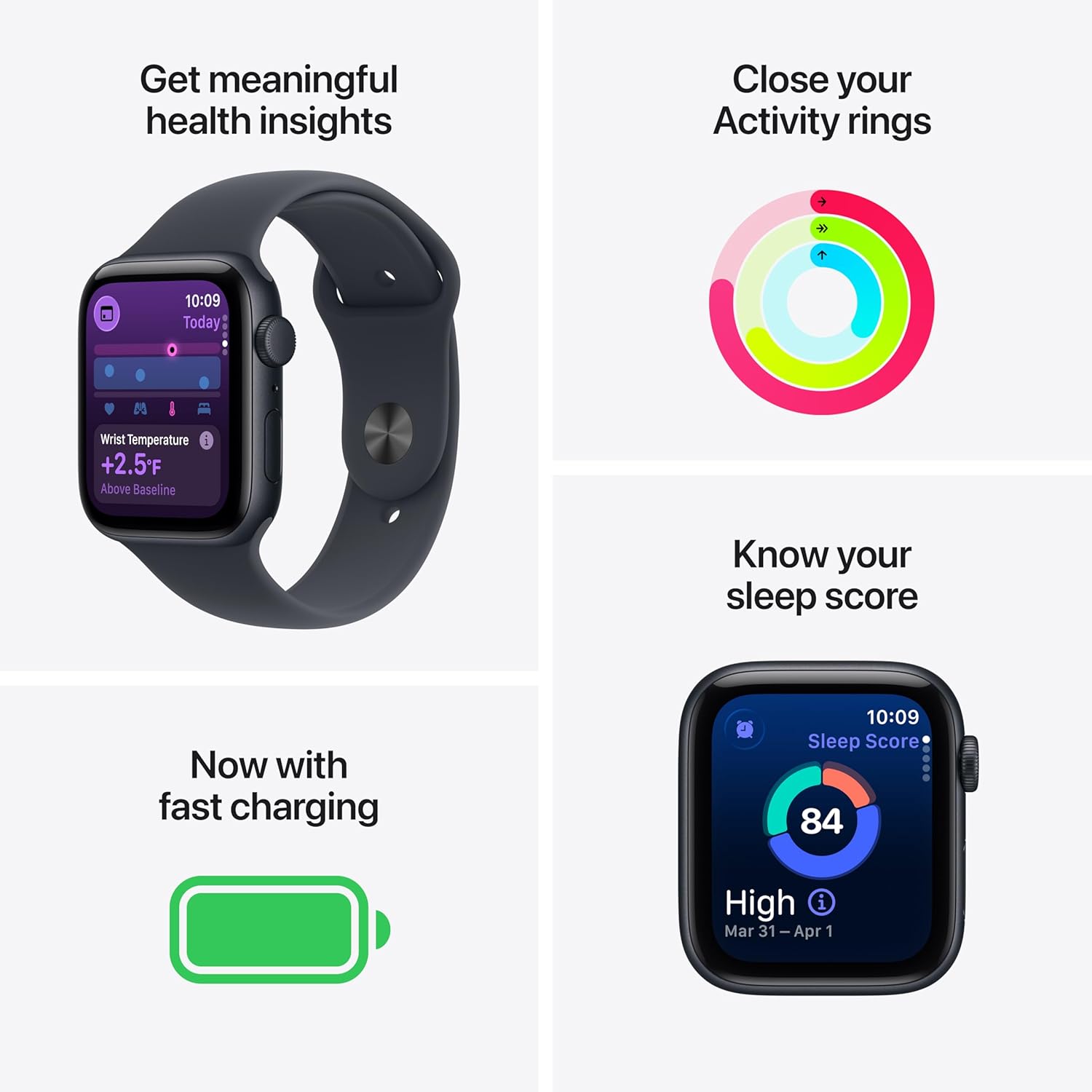
Think of a smartwatch as a wrist-worn computer that tracks your health, delivers notifications from your phone, and — depending on the model — can monitor your heart rate, count your swim laps, or guide you through a backcountry trail without cell service. Two brands dominate this category for serious buyers: Apple Watch, which starts around $249 for the SE and climbs to $799 for the Ultra 2; and Garmin, a sports-focused brand whose fitness-forward watches range from roughly $249 for the Forerunner 165 up to $1,099 for the Fenix 8 Solar. Both are excellent. Both have devoted followings. And if you’re buying one as a gift — or choosing one for yourself after months of research — the single question that determines the right answer almost every time isn’t about features. It’s about the phone in the recipient’s pocket.
That one question shapes everything else: which apps work, which health features are available, how long the battery actually lasts in daily use, and whether the watch becomes a beloved daily driver or sits in a drawer by February. This guide walks through both sides of that decision with specific numbers, real tradeoffs, and a clear decision rule at the end.
| EDITOR'S PICK[Garmin Instinct® 3 45mm](https://www.amazon.com/dp/B0DTZKMNV1?tag=greenflower20-20) | Mid-tier[Garmin vívoactive® 6](https://www.amazon.com/dp/B0F38FCHD2?tag=greenflower20-20) | Budget pick[Garmin Forerunner 165](https://www.amazon.com/dp/B0CT3SGHXL?tag=greenflower20-20) | |
|---|---|---|---|
| Display type | Solar | AMOLED | AMOLED |
| Battery life | — | Up to 11 days | — |
| Case size | 45mm | — | — |
| Activity focus | Rugged outdoor | Health & fitness | Running |
| Built-in flashlight | ✓ | — | — |
| Price | $299.99 | $249.99 | $199.99 |
| See on Amazon → | See on Amazon → | See on Amazon → |
The Ecosystem Lock-In Is Real — and It Runs Deeper Than You Think
Apple Watch only works with iPhone. That’s not a caveat buried in footnotes; it’s a hard technical constraint. Wirecutter’s Best Smartwatches guide calls this “the most important thing to know before you buy.” Setup requires an iPhone running a recent version of iOS, and features like ECG (a single-lead electrocardiogram that can flag irregular heart rhythms), crash detection, and Emergency SOS satellite connection only function inside Apple’s software ecosystem.
Garmin, by contrast, is platform-agnostic. The Garmin Connect app runs on both iOS and Android, and the watches pair equally well with either. That’s a quiet but significant advantage for gift-givers who aren’t sure which phone the recipient uses, or for households where one partner uses iPhone and the other uses Android.
Here’s why this matters in practical terms beyond setup: Apple Watch’s health data — heart rate trends, sleep stages, cycle tracking, medication reminders — all feed into Apple Health, which doubles as a medical record repository that many U.S. health systems can now pull from. Garmin’s data lives in Garmin Connect and can sync to Apple Health or Google Fit, but the integration isn’t as seamless. If the recipient is already using Apple Health to share data with a doctor or a fitness coach, an Apple Watch is the tighter loop. If they’re Android users or platform-agnostic, Garmin’s ecosystem is just as complete on its own terms — and in some fitness-tracking dimensions, notably running and endurance metrics, it goes significantly deeper.
Battery Life: Where the Math Gets Honest
This is where the comparison stops being philosophical and starts costing people time. Manufacturer-rated figures give a baseline, and real-world reviews consistently land below the headline numbers — but the gap between the two brands remains dramatic.
Apple Watch Battery Life
The Apple Watch Series 10 is rated at approximately 18 hours of standard use, with a Low Power Mode that stretches that to roughly 36 hours. The Apple Watch Ultra 2 extends endurance considerably, with Apple rating it at around 60 hours standard and up to 72 hours in Low Power Mode. In real-world testing described in The Verge’s Apple Watch Ultra 2 review, reviewers found that typical daily use with always-on display enabled consumed a full charge in roughly two to three days. The practical rhythm for most Apple Watch owners is a nightly charge or a top-up during a morning shower — a deliberate habit that works once established, but requires forming in the first place.

Garmin
$249.99
In stock on Amazon
Check price on AmazonGarmin Mid-Range Battery Life
Garmin’s mid-range offerings tell a markedly different story. The Forerunner 265 is rated at approximately 13 days in smartwatch mode. Tom’s Guide’s Garmin Fenix 8 review notes that in real-world use across a mix of GPS workouts and always-on display, reviewers consistently saw 10 to 12 days between charges for the Fenix line. For a gift recipient who travels frequently, hates charging routines, or wants to wear a watch to sleep every night for recovery tracking without fussing with cables, Garmin’s multi-day endurance is a genuine quality-of-life difference — not a spec-sheet talking point. Owners of the Forerunner 265 and Fenix series consistently report that the charging habit essentially disappears; the watch gets plugged in roughly once a week, when they’re doing laundry.
Garmin
$249.99
In stock on Amazon
Check price on AmazonGarmin Flagship Battery Life
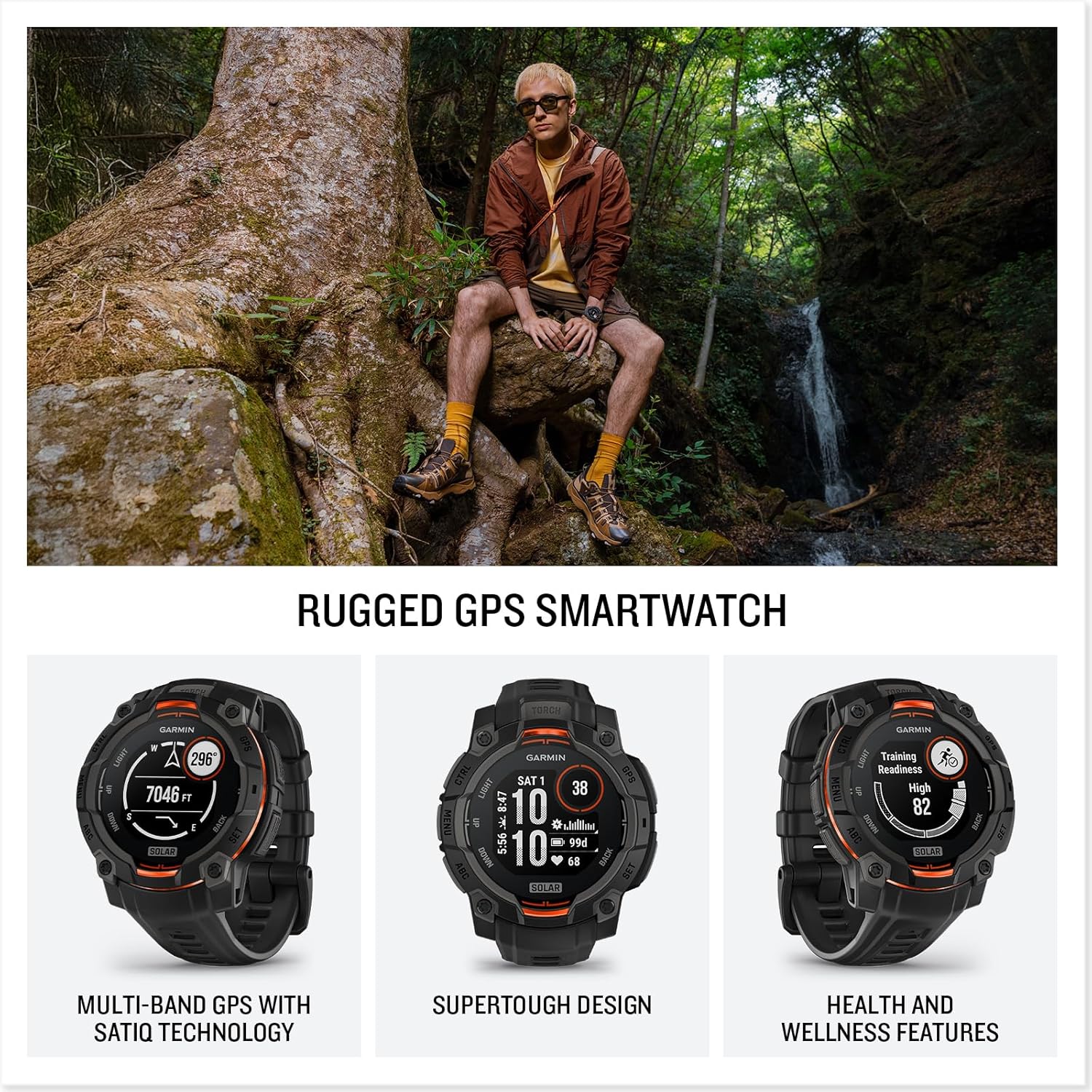
At the top of Garmin’s lineup, the Fenix 8 (47mm) carries a manufacturer rating of approximately 16 days in smartwatch mode and up to 90 hours in GPS mode. The Fenix 8 Solar models extend those figures further through a solar-charging bezel — a feature that becomes practically relevant on week-long backcountry expeditions where wall outlets do not exist. CNET’s Garmin vs. Apple Watch comparison piece confirms that battery longevity is one of Garmin’s most decisive advantages over Apple Watch for buyers whose use cases push beyond daily commuter territory.
Garmin
$299.99
In stock on Amazon
Check price on AmazonFeature Depth: Where Each Watch Actually Wins
The honest assessment is that neither watch is “better” in the abstract. They are optimized for different users, and the comparison reveals genuine category differences rather than a simple winner.
Apple Watch Strengths
Apple Watch is the stronger pick for iPhone users who want deep smartphone integration and broad health monitoring. Notifications, Apple Pay, Siri, and seamless handoff with AirPods are polished in a way Garmin doesn’t attempt to match. The Verge’s Apple Watch Ultra 2 review describes the iPhone-watch relationship as “the tightest integration in consumer electronics.” On the health side, ECG, blood oxygen sensing, temperature monitoring, crash detection, fall detection, and a sleep apnea notification feature introduced on the Series 10 cover a breadth of clinical territory that reviewers at 9to5Mac identified as among the most underrated additions to any consumer wearable. Third-party apps — Spotify, Strava, airline boarding passes, hotel digital keys — run natively on watchOS in a library that dwarfs Garmin’s. The Series 10’s case measures 9.7mm thick, making it the thinnest Apple Watch to date per Apple’s own specifications, and owners consistently describe it as something that disappears on the wrist during daily wear.
Garmin
$249.99
In stock on Amazon
Check price on AmazonGarmin Strengths for Athletes
Garmin is the stronger pick for serious endurance athletes regardless of phone platform. Running dynamics — ground contact time, stride length, vertical oscillation — training load analysis, recovery advisor, and race predictor algorithms are Garmin’s home turf. CNET’s Garmin vs. Apple Watch comparison piece notes that Garmin’s running metrics go deeper than anything Apple Watch offers for athletes in structured training. Outdoor navigation on the Fenix 8 and Epix series adds full topographic maps, breadcrumb trail navigation, and ski resort maps stored onboard — no cell signal required. This is not a feature Apple Watch approximates; it’s a category Apple does not compete in. Tom’s Guide’s Garmin Fenix 8 review counted over 40 distinct sport modes including kitesurfing, open-water swimming with dolphin kick detection, and golf handicap tracking, reflecting a genuinely encyclopedic activity profile library.
Garmin
$299.99
In stock on Amazon
Check price on AmazonBudget and Lifestyle Entry Points
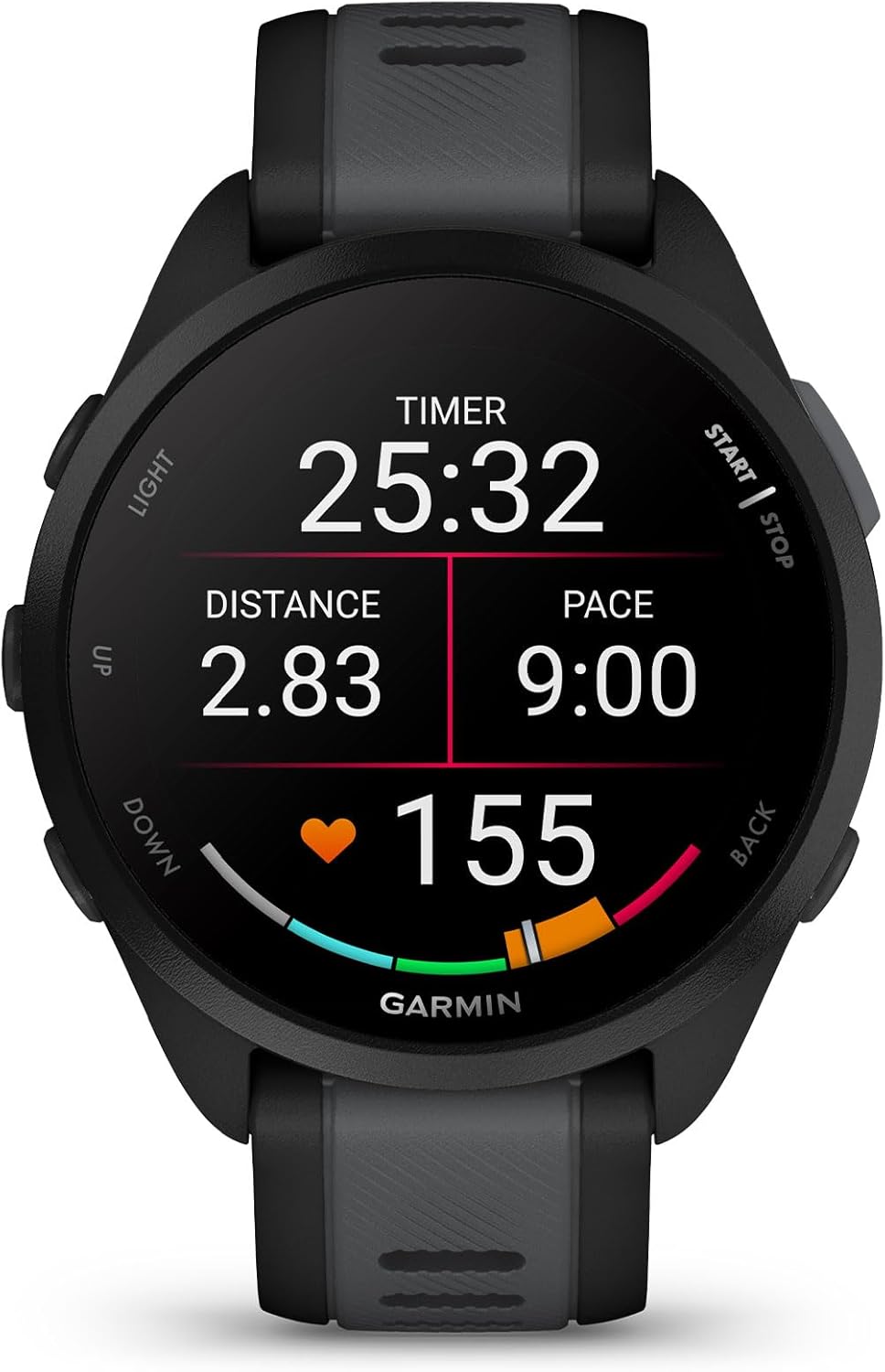
Both brands have entry-level options worth knowing for gift budgets under $300. The Apple Watch SE ($249) covers the core health and notification features — heart rate, crash detection, Activity rings, Apple Pay — without ECG or always-on display. It is the right gift for an iPhone user who wants the ecosystem experience at a lower price. Wirecutter’s Best Smartwatches guide positions the SE as the sensible starting point for buyers who find the Series 10 unnecessary. On the Garmin side, the Forerunner 165 ($249) delivers GPS running metrics, heart rate monitoring, and Garmin’s training tools in a lighter chassis, without onboard maps. It is purpose-built for runners and is the entry point CNET’s comparison piece recommends for fitness-first buyers on a budget. Garmin’s Venu 4 ($449) serves lifestyle-first buyers who want health tracking in a more traditional watch aesthetic with a brighter AMOLED display — the closest Garmin comes to a daily-wear fashion piece.
Garmin
$199.99
In stock on Amazon
Check price on AmazonPrice Reality and the Gift Budget Question
Apple Watch has a clear good-better-best ladder: Watch SE ($249), Series 10 ($399), and Ultra 2 ($799). Reviewers widely agree that the Series 10 is the sweet spot for most buyers — the Ultra 2’s extra capabilities, including a louder speaker, action button, and larger display, matter most to a narrow slice of users training for events like Ironman triathlons or leading dive expeditions.
Garmin’s pricing is wider and less intuitive. The Forerunner 165 ($249) is the running-focused entry point. The Forerunner 965 ($599) adds full onboard maps and advanced training tools. The Fenix 8 ($899–$1,099 depending on size and band) is the flagship adventure watch. Each step up in price unlocks meaningfully different capabilities rather than incremental refinements, which makes Garmin’s lineup harder to navigate for gift-givers but more precisely matched to specific use cases once the recipient’s activities are known.
Total cost of ownership note: Apple Watch requires no subscription to use core health features, but Ultra 2 buyers who want accidental damage coverage typically add AppleCare+, available at $9 per month or $149 upfront, covering two incidents per year. Garmin watches carry no subscription requirement, and Garmin’s standard warranty runs two years versus Apple’s one year. For a gift in the $900-plus range, that extra year of manufacturer coverage is worth naming explicitly when presenting the gift.
One practical detail that matters at gift-giving time: Apple Watch bands are interchangeable across Series 4 and later models, so a recipient who already owns an Apple Watch can use existing bands on a new model — a small but appreciated detail for partners shopping for someone already in the ecosystem. Garmin’s band compatibility is model-specific, though 22mm and 26mm quick-release bands are widely available from third-party accessory makers.
The Decision Rule
Here’s the clean if-then framework after working through the research:
If the recipient owns an iPhone → Apple Watch, almost certainly. The Series 10 is the default recommendation for most people; it covers health monitoring, smart notifications, Apple Pay, and third-party apps in a slim, daily-wearable package. Step up to the Ultra 2 only if they’re training for endurance events, leading dive expeditions, or explicitly want the most capable Apple Watch regardless of cost.
If the recipient owns an Android phone → Garmin, full stop. Apple Watch will not function as a smartwatch paired to Android. The Forerunner 265 or 965 is the right starting point for runners; the Fenix 8 for multi-sport athletes or outdoor adventurers; the Venu 4 for lifestyle-first buyers who want health tracking without a sporty aesthetic.
If you don’t know their phone, ask. This is not a situation for guessing. A Garmin gifted to a devoted iPhone user is a capable watch they’ll tolerate; an Apple Watch gifted to an Android user is a $399 paperweight. A five-second text message eliminates the risk entirely.
If they’re a serious endurance athlete regardless of phone → Garmin first, then decide whether their iPhone loyalty makes the tradeoffs acceptable. Some iPhone users do run Garmin watches and accept the slightly less seamless notification experience in exchange for training analytics. CNET’s comparison piece and Tom’s Guide’s Fenix 8 review both confirm this is a real and reasonably happy cohort — but they go in eyes open, choosing the training tool over the lifestyle device deliberately.
The gifting decision that hinges on one question isn’t really complicated once you ask it. The watches are different tools built for different people. Get the ecosystem right and either choice is excellent.